

The Short Answer: Yes, you can stain pressure-treated wood, but timing matters. The wood must dry to a moisture content of 15% or less before staining, which typically takes one to six months depending on climate and wood type.
Pressure-treated lumber resists rot and insects, but it doesn't protect against UV rays or weathering. Without stain, your pressure-treated deck will turn gray and crack within a year or two. Staining is a straightforward DIY project when you wait for the right conditions.

Understanding Pressure-Treated Wood and Why It Needs Stain
Pressure-treated lumber goes through a process where chemical preservatives are forced deep into wood fibers under high pressure. This treatment creates a barrier against rot, fungal growth, and insect damage, making it ideal for decks, fences, pergolas, and retaining walls. Most PT wood at your local hardware store or Home Depot is made from southern yellow pine.
What Pressure Treatment Does and Doesn't Do
While pressure treatment protects against decay and pests, it leaves your wood vulnerable to other threats:
-
UV ray damage: Sunlight breaks down wood fibers, causing graying and surface deterioration. Direct sunlight accelerates this damage.
-
Moisture cycling: Rain and humidity cause wood to absorb and release water repeatedly, leading to cracks, splits, and warping.
-
Surface wear: Foot traffic wears down unprotected wood surfaces faster than stained wood.
A quality wood stain blocks UV rays while repelling moisture. This is why staining your pressure-treated deck within the first year provides long-lasting protection.
New vs. Kiln-Dried Pressure-Treated Lumber
Standard pressure-treated lumber comes "wet" from the mill and needs time to dry before staining. Kiln-dried after treatment (KDAT) or air-dried after treatment (ADAT) lumber has already been dried and can often be stained within weeks. Look for KDAT or ADAT stamps on lumber end tags when shopping. KDAT costs more but saves significant drying time if you're working on a tight schedule.
When to Stain: Testing Moisture Content
The biggest mistake homeowners make is staining too soon. When stain is applied to wet wood, it can't penetrate properly. Instead, it sits on the surface where it will peel or flake within months. Your patience during the drying time will determine whether your stain job lasts one season or several years.
How Long Should You Wait?
Drying time varies based on several factors:
-
Climate: Hot, dry climates may allow staining in two to three weeks. Humid regions may require three to six months.
-
Season: Wood installed in spring or summer dries faster than fall or winter installations.
-
Sun exposure: Decks receiving direct sunlight dry faster than shaded areas.
-
Wood thickness: Thicker boards and posts take longer to dry than standard decking.
The general guideline is one to three months for most weather conditions. However, testing is always better than guessing.

Two Reliable Methods to Test Readiness
1. The Sprinkle Test
Sprinkle drops of water onto the wood surface. If water beads up, the wood is too wet. If it soaks in within 10 minutes, you're ready for staining. Test multiple areas since moisture levels can vary across your deck.
2. Using a Moisture Meter
A moisture meter provides the most accurate reading. These handheld devices are available at most hardware stores for around $15 to $50. Aim for a moisture level of 15% or less. Test several boards in different locations, especially areas with varying sun exposure.
Preparing Your Wood Surface for Staining
Proper preparation makes the difference between a stain job that lasts and one that fails. Even brand new pressure-treated wood needs cleaning before staining. Skipping this step is one of the most common reasons stain fails prematurely.

Cleaning New Pressure-Treated Wood
New PT wood often has mill glaze and residue that prevents stain from penetrating. Follow these simple steps:
-
Sweep or brush: Remove loose dirt and debris from the wood surface.
-
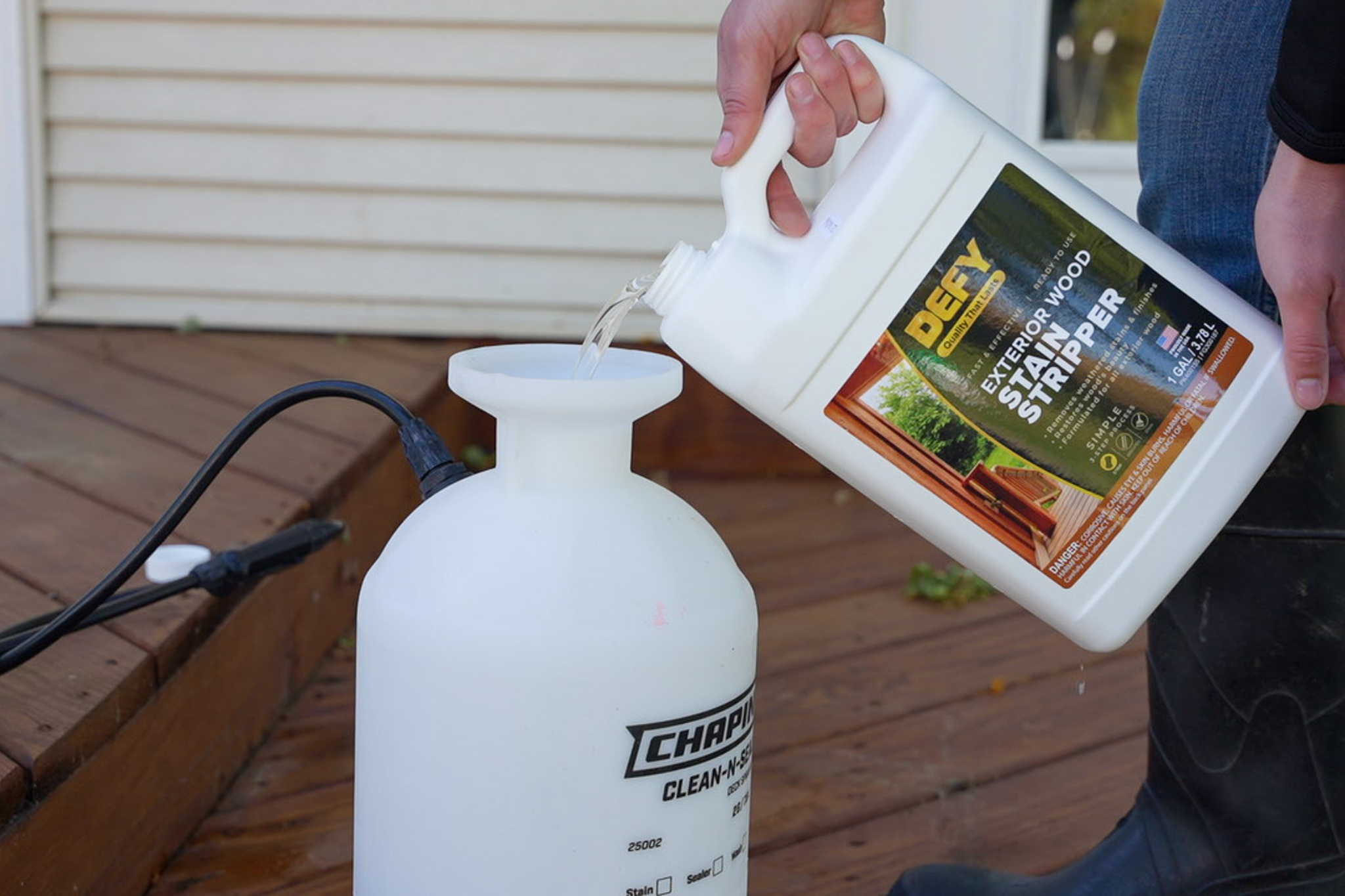
Apply wood cleaner: Use a deck cleaner formulated for pressure-treated wood. Apply with a pump sprayer or brush.
-
Scrub the surface: Work the cleaner into the wood grain using a stiff brush to open wood pores.
-
Rinse thoroughly: Use a garden hose or pressure washer on low to remove residue. Keep the nozzle 12 inches from the wood surface.
-
Apply brightener: Wood brightener restores natural color and opens pores for better stain absorption.
-
Allow drying time: Wait 24 to 48 hours before staining. Check moisture content again.
Preparing Weathered Pressure-Treated Wood
Decks or fences left unstained develop gray, damaged surface fibers that won't accept stain evenly. A deck cleaner with mildewcide removes mold stains. For severely weathered wood, light sanding after cleaning creates a fresh surface for stain penetration. Always work with the wood grain when sanding to avoid scratches.
Choosing the Right Stain for Your Project
Understanding different stain types helps you match the product to your project goals and maintenance preferences.
Stain Transparency Levels
-
Clear and transparent stains: Allow full natural wood grain to show while providing UV and moisture protection. Ideal for new wood but require more frequent reapplication.
-
Semi-transparent stain: Adds color while allowing wood grain to show. Offers good balance of appearance and protection.
-
Solid stain: Provides maximum UV protection and hides imperfections. Works well on older decks but obscures wood grain.
Water-Based vs. Oil-Based Stains
Water-based stains clean up with soap and water, dry quickly, and work well on pressure-treated wood. Modern formulas offer excellent durability and UV protection.
Oil-based stains penetrate deeper and provide a richer appearance but take longer to dry and require mineral spirits for cleanup.
Features to Look For
Prioritize products offering UV protection, mold and mildew resistance, and water repellency. Stains with zinc-nano technology provide superior protection while maintaining a natural appearance.

DEFY Wood Stain: Long-Lasting Protection for Your Outdoor Space
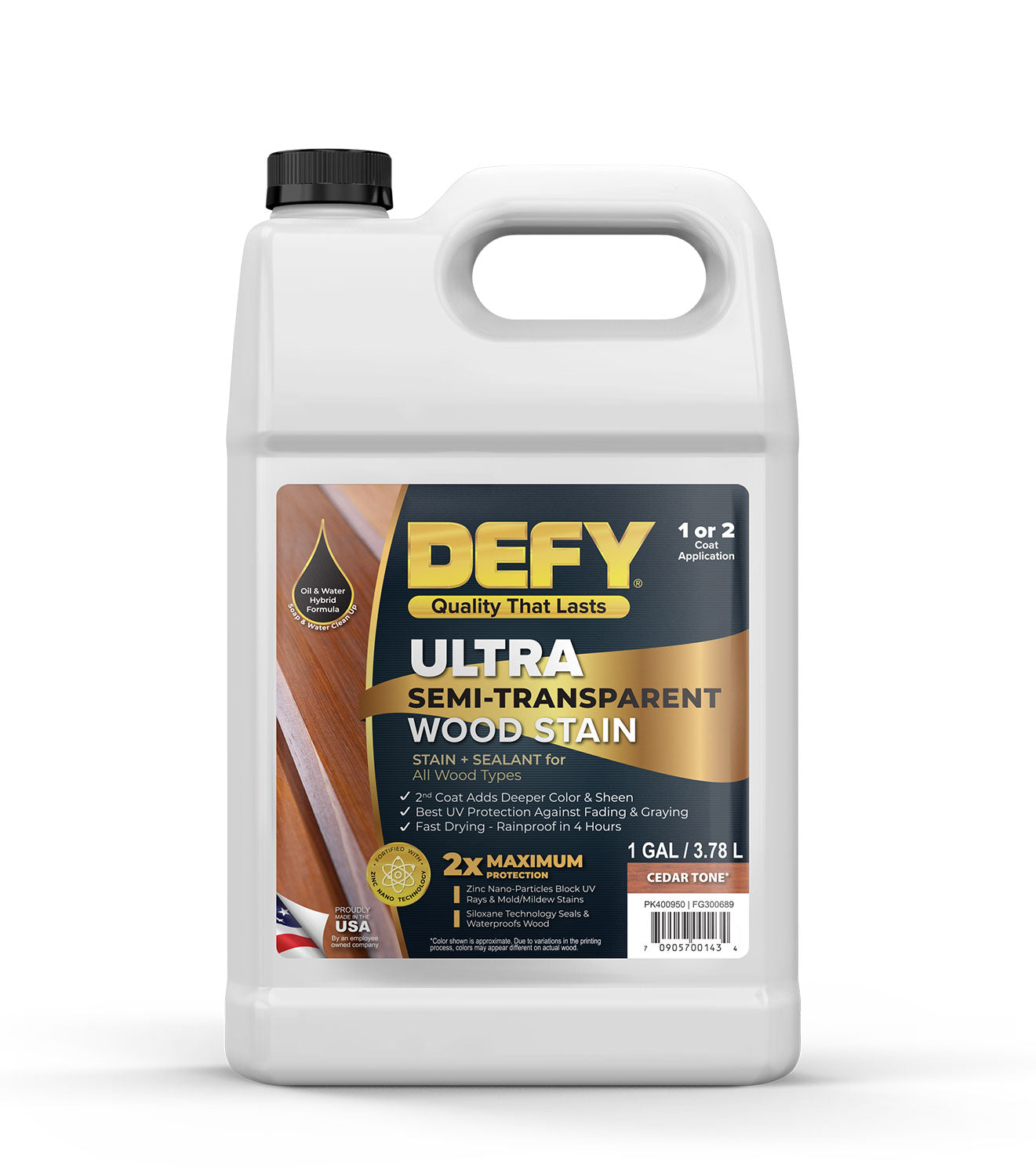
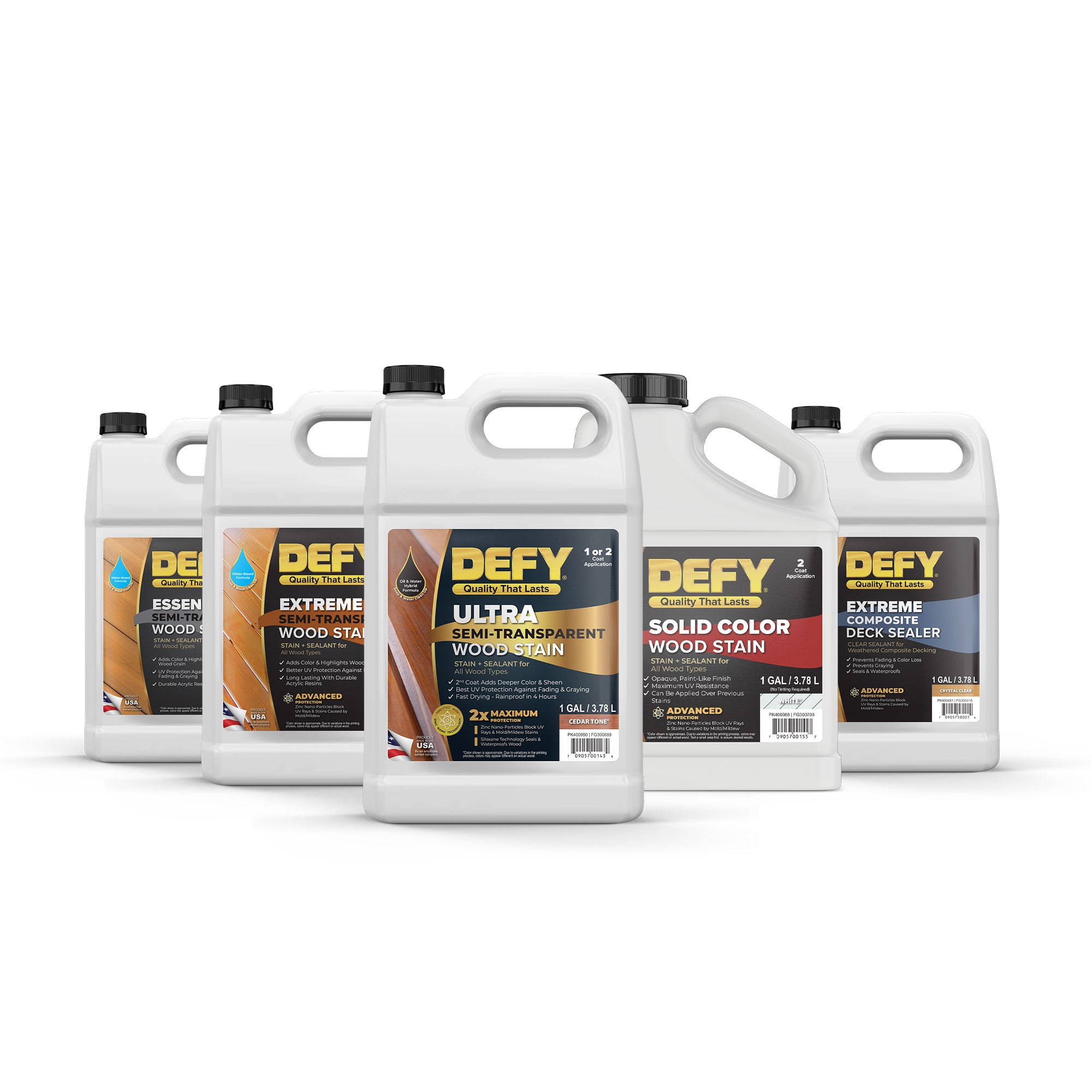
When protecting your pressure-treated deck or fence, DEFY Wood Stain delivers professional-grade results that homeowners can achieve themselves. DEFY's water-based stains penetrate and protect exterior wood surfaces from UV rays, moisture, and mold.
DEFY offers options for every project. Their semi-transparent stains let natural wood grain show while adding color and protection. For older decks, DEFY Solid Color Wood Stain provides maximum coverage. All products clean up with soap and water.
Ready to protect your pressure-treated wood? Start with DEFY's sample kits to find your perfect color, then use their Project Planner to identify what you need.