

The Short Answer: To strip stain from wood, apply a chemical stripper or wood stain remover, let it sit according to the product directions, then scrape away the old finish with a plastic scraper or putty knife. Follow up with fine-grit sandpaper to get down to bare wood before applying a new stain.
Old stain that is peeling, fading, or uneven will prevent a new coat from bonding properly. The good news is that stripping stain from wood is straightforward once you know the right approach. This guide walks you through what you need, how to do it, and what to watch out for.
When Should You Strip Old Stain?
A light scuff and recoat may work if your existing finish is in decent shape and you are applying a similar color. But sometimes stripping down to the natural wood is the only way to get a good result.
Signs It Is Time to Strip
-
Peeling or flaking finish: When old stain lifts away from the wood surface, a new coat will not stick. You need to remove the old finish completely.
-
Switching stain types: Going from an oil-based stain to a water-based stain (or vice versa) usually requires stripping so the new product can penetrate the wood grain.
-
Uneven color or blotching: Excess stain buildup or patchy spots often mean the old layers need to come off before you start fresh.
-
Heavy coating buildup: Multiple layers of solid stain or paint can trap moisture and cause damage over time.
Stripping a flat surface like a tabletop or deck board tends to be straightforward. Vertical surfaces like fence panels are trickier since strippers drip. Gel-based products work better in those situations.
Tools and Materials You Will Need
Having the right supplies on hand before you start saves time and frustration. Here is what to gather.
Stripping Materials
-
Wood Stain Stripper: Purpose-built stain strippers like DEFY Stain Stripper are designed to remove weathered, clear, and semi-transparent wood stains while restoring the natural look of the wood surface.
-
Wood Cleaner: Oxygen-based cleaners like DEFY Wood Cleaner are formulated to deep clean exterior wood by removing dirt, grime, mold, and weathered graying. They help restore the wood’s natural appearance while opening the wood pores so new stains can penetrate and bond more effectively.
-
Wood Brightener: Wood brighteners like DEFY Wood Brightener are oxalic acid–based solutions designed to restore the natural color of wood after cleaning or stripping. They remove tannin, rust, and leaf stains while neutralizing leftover cleaner or stripper residue and preparing the surface for better stain absorption.
A note on safety: Some older paint strippers contain methylene chloride, which poses serious health risks. Check product labels and choose safer alternatives when possible.
Application and Removal Tools
-
Plastic scraper or putty knife: Use these to lift softened stain off the wood. Plastic scrapers are gentler and less likely to gouge the wood grain than metal tools.
-
Chip brush: An inexpensive disposable brush works well for applying chemical strippers evenly across the wood surface.
-
Steel wool and wire brush: Helpful for working stripper into textured grain or removing stubborn old stain from hard-to-reach spots.
-
Orbital sander with grit sandpaper: Start with medium grit (80-100) for heavy removal and finish with fine-grit sandpaper (150-220) to smooth the bare wood.
-
Tack cloth: Use this to wipe away dust after sanding so the surface is clean for a new stain.
Protection and Cleanup
-
Protective gloves and safety glasses: Chemical strippers irritate skin and eyes. Do not skip this step.
-
Drop cloth: Lay this down under your work area to catch drips and scrapings, especially when working on a deck or porch.
-
Plastic wrap: Covering the applied stripper with plastic wrap slows evaporation and helps the product work longer on stubborn old finishes.
How to Strip Stain from Wood: Step by Step

The stripping process is similar whether you are working on deck stain, a piece of furniture, or wood siding. Adjust based on the size of your project.
Step 1: Prepare the Area
Lay down a drop cloth to protect surrounding surfaces. Put on protective gloves and work in a well-ventilated space. If you are stripping an outdoor deck, pick an overcast day so the stripper does not dry out too quickly. Lightly dampen the area to be stripped.
Step 2: Apply the Stripper
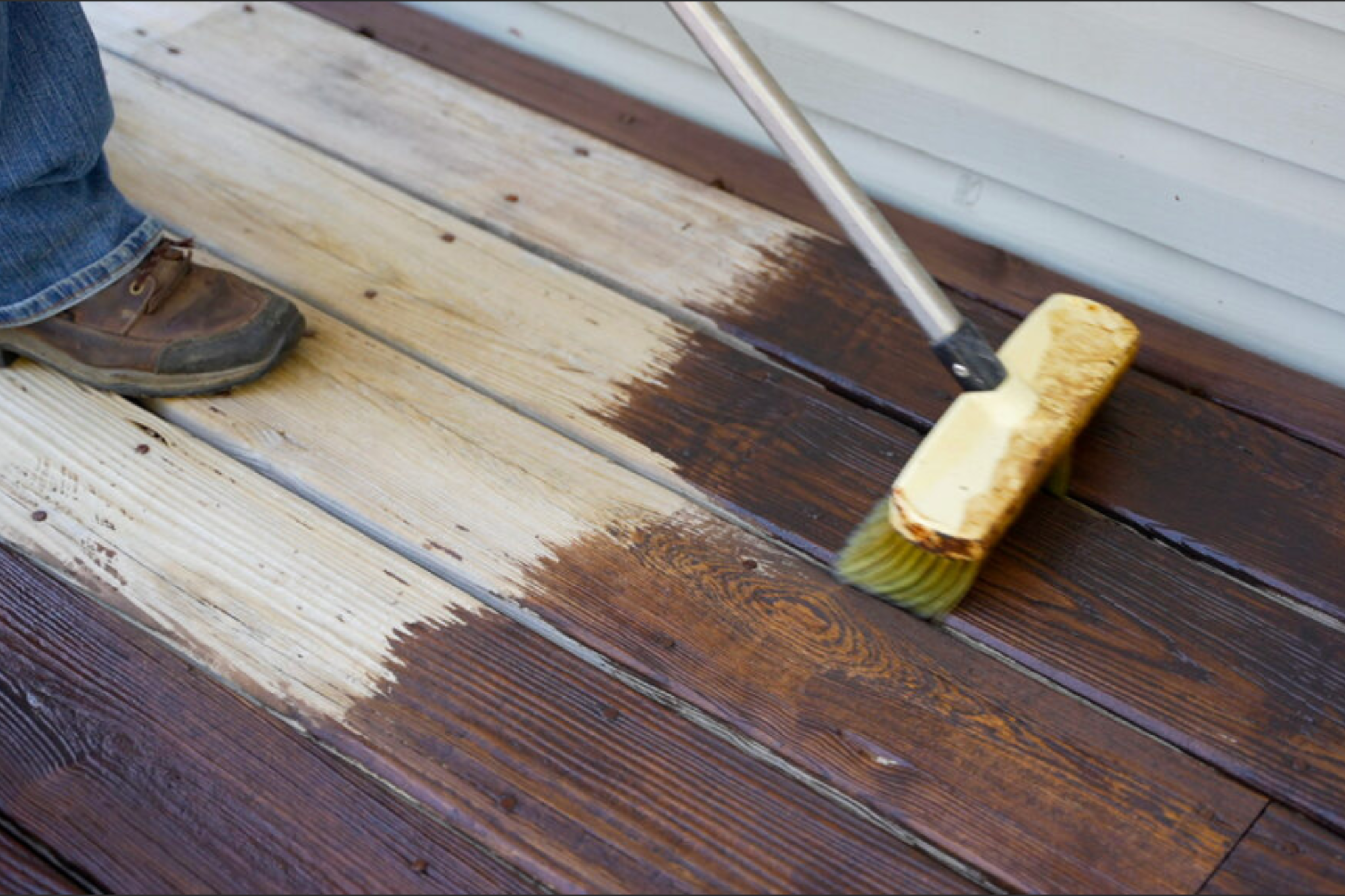
Use a chip brush to apply a thick, even coat of chemical stripper or stain stripper across the wood surface. Work in manageable sections rather than coating the entire area at once. For stubborn old wood stain, cover the wet stripper with plastic wrap to keep it active longer.
Step 3: Wait and Test
Follow the product directions for timing. Most strippers need 15 to 30 minutes to soften the old stain. Test a small area with your plastic scraper. If the finish lifts easily, you are ready. If not, give it more time or apply a second coat.
Step 4: Scrape Away the Old Finish
Working with the wood grain, use a plastic scraper or putty knife to remove the softened stain. On flat surfaces, long steady strokes work best. For carved areas on wood furniture, steel wool or a wire brush can help get into grooves. Let the stripper do the hard work rather than pressing too hard.
Step 5: Clean and Neutralize
Wipe down the stripped wood with mineral spirits or denatured alcohol to remove residue. Some strippers require a neutralizing step, so check the label. Leftover chemicals can interfere with new stain adhesion.
Step 6: Sand to Bare Wood
Once the surface is clean and dry, use an orbital sander or hand-sand with grit sandpaper to smooth out any remaining color or roughness. Start with a medium grit and finish with fine-grit sandpaper for a smooth surface. Always sand in the direction of the wood grain to avoid scratches.
After sanding, wipe the surface with a tack cloth to remove dust. For softer species like pine or red oak, consider applying a wood conditioner before staining to promote even absorption on the natural wood.
Once the process is complete, it is important to neutralize and brighten the wood using DEFY Wood Brightener.
Tips for Different Wood Types and Projects
The approach to stripping varies depending on what you are working with. Here are a few things to keep in mind.
Solid Wood Furniture vs. Decks
Furniture usually has thinner coats and more detail work, so gel strippers and hand tools are your best bet. Decks cover a lot more area, so you may want a pump sprayer for application and a pressure washer on a low setting for rinsing.
Oil-Based Stain vs. Water-Based Stain
Oil-based stains penetrate deeper into the wood grain, so they can be harder to strip. You may need a stronger chemical stripper or multiple applications. Water-based stains sit closer to the surface and often respond well to standard strippers and light sanding.
Avoiding Common Mistakes
-
Do not use harsh chemicals without ventilation: Work outdoors or open windows when stripping indoors.
-
Do not rush the process: Giving the stripper enough time saves you from extra scraping and sanding.
-
Do not skip the final sanding: Even if the wood looks clean, a light pass with fine-grit sandpaper opens the pores for better stain absorption.

DEFY Wood Stain: Your Partner in Wood Restoration

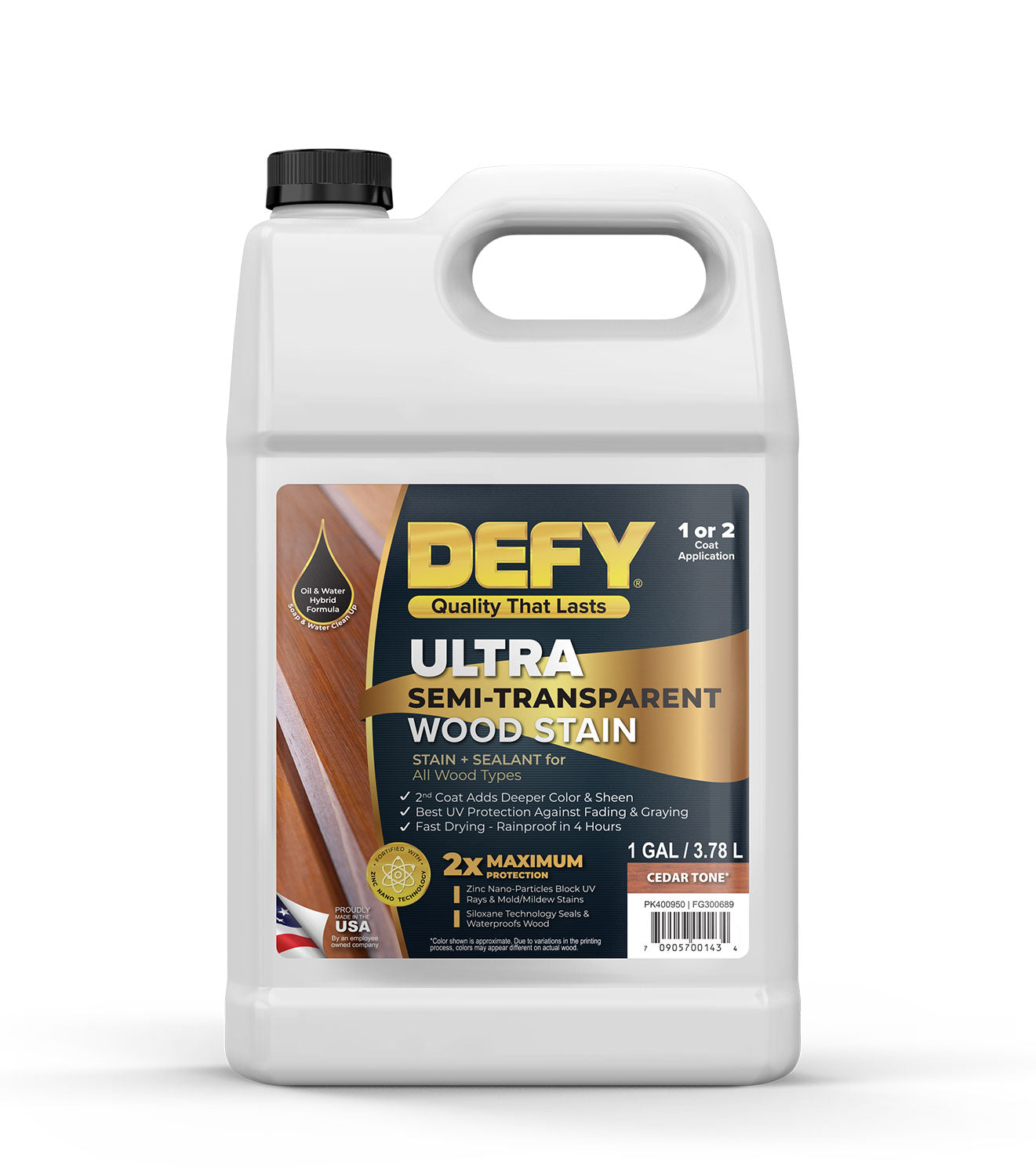
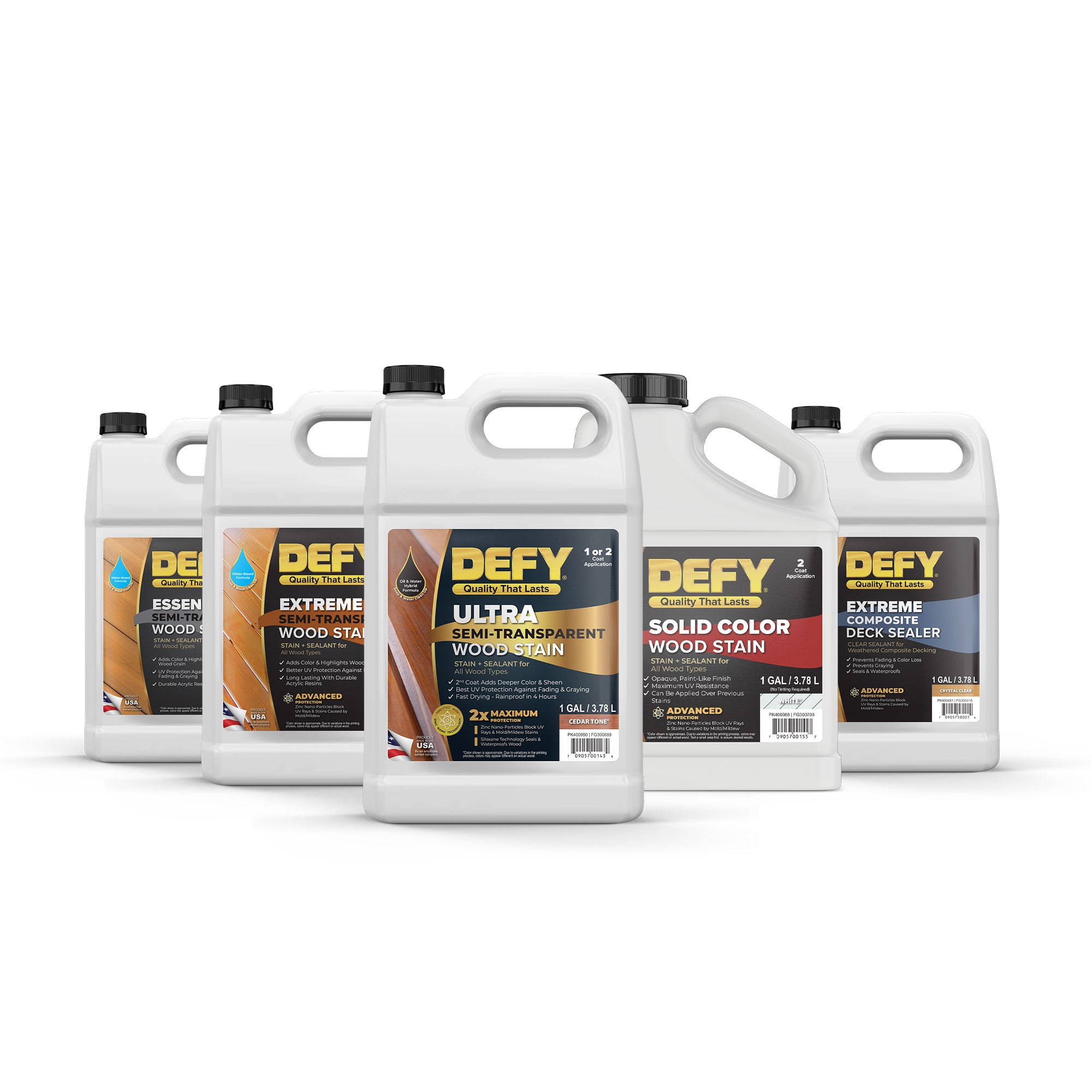
Once you have put in the hard work of stripping your wood down to a clean surface, the stain you choose next matters. DEFY Wood Stain offers water-based formulas that go on easily and provide long-lasting protection against UV damage, moisture, and mold. Their zinc-nano technology helps the finish hold up year after year, so you are not repeating this stripping process anytime soon.
Ready to give your wood a fresh start? Browse DEFY Wood Stain products to explore stain colors, sample kits, and prep products designed to make your next project easier.